
Ceramic Coating Guide for New Cars in Charlotte
- Chris Walker
- Aug 3
- 6 min read

A new vehicle can look flawless under the dealership lights, then collect pollen, brake dust, water spots, and road film within its first few weeks. This ceramic coating guide for new cars explains what professional protection actually does, when to apply it, and what it takes to preserve that just-delivered finish for years rather than months.
For owners who value presentation and long-term condition, ceramic coating is not simply an add-on. It is a deliberate investment in easier maintenance, improved gloss, and a stronger barrier between your paint and the daily realities of driving around Charlotte and the surrounding Carolinas.
What Ceramic Coating Does for a New Car
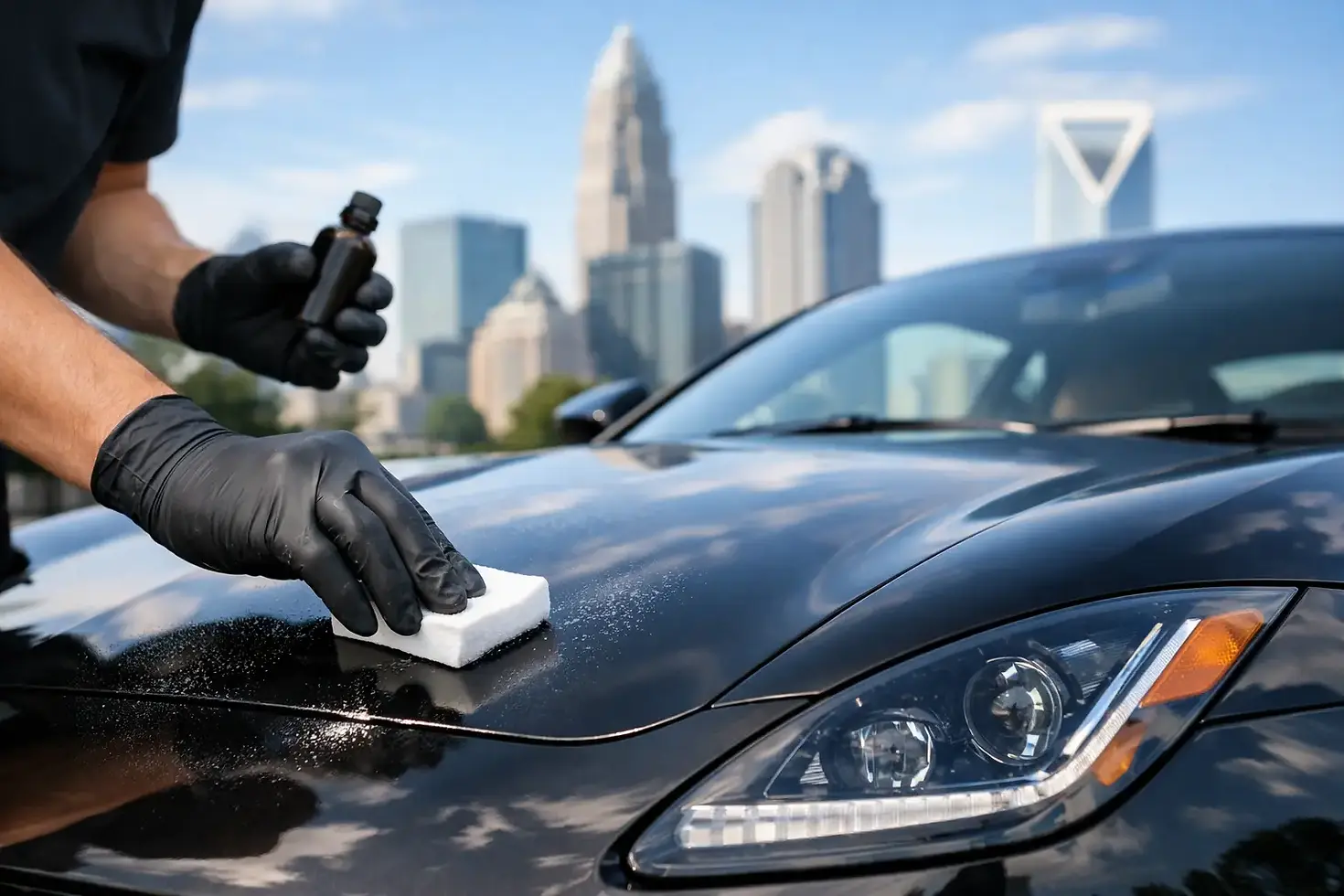
A ceramic coating is a liquid polymer professionally applied to exterior paint and cured into a thin, durable protective layer. Once cured, it creates a highly hydrophobic surface that repels water more effectively than traditional waxes or sealants. Rain, wash water, and many contaminants bead up and release more easily, which helps keep the vehicle looking cleaner between appointments.
The visual benefit is immediate. Quality coatings sharpen reflections, deepen color, and give paint a crisp, glass-like finish. On black, deep blue, gray, and metallic paint, the difference can be especially noticeable. On lighter colors, the result is often more subtle but still valuable in the way the surface stays cleaner and feels smoother.
Protection is the bigger reason to consider it. A ceramic coating helps reduce the impact of UV exposure, tree sap, bird droppings, bug residue, light road grime, and chemical fallout. These contaminants can etch or stain unprotected clear coat when they are left in place. The coating provides a sacrificial layer that makes prompt cleaning more effective and helps preserve the finish underneath.
That said, ceramic coating is not armor. It will not prevent rock chips, deep scratches, door dings, or collision damage. It also does not make washing unnecessary. The best way to view it is as a premium maintenance system: it protects the paint, enhances the appearance, and makes proper care easier.
Why a New Car Still Needs Paint Preparation
“New” does not always mean perfect. Vehicles are transported by rail and truck, stored outdoors, handled at dealerships, and washed before delivery. By the time the keys reach your hand, the paint may carry bonded contaminants, water spots, light wash-induced marring, adhesive residue, or fine scratches that are only visible in direct sunlight.
A professional coating service begins with a detailed inspection, not a rushed application. The exterior should be safely washed and chemically decontaminated to remove embedded iron particles, road film, and other contaminants. A clay treatment may be used when needed to create a smooth, clean surface.
Paint correction is often worth considering
Light polishing before coating can remove minor swirls and haze while improving clarity and gloss. This matters because a coating will preserve the condition beneath it. It can make refined paint look exceptional, but it will not hide existing scratches or correct cloudy finish work.
Not every new vehicle needs extensive correction. A well-kept car that has only been driven a short distance may need minimal polishing. A vehicle that sat on a lot for months or was repeatedly run through dealership wash equipment may need more attention. The right level of correction depends on paint condition, color, owner expectations, and how closely the finish will be inspected.
Ceramic Coating Guide for New Cars: Timing Matters
The best time to coat a new vehicle is soon after purchase, once the paint has been properly evaluated and prepared. Applying protection early limits the time fresh clear coat is exposed to UV rays, contaminants, pollen, and harsh wash methods.
There is no need to coat a car the same afternoon it comes home if doing so means skipping preparation. A careful inspection and proper installation are more valuable than speed. However, waiting six months or a year often means the vehicle will need more correction before it can reach the same elevated standard.
For leased vehicles, coating can still make sense when appearance and easy upkeep matter. The decision comes down to how long the vehicle will be kept and how it is used. A driver who leases for three years, parks outdoors, and wants the vehicle to remain polished with less weekly effort may see clear value. Someone who trades frequently and uses automatic washes may be better served by a lower-commitment protection option.
Choosing the Right Protection Level
Ceramic coatings are available in different formulations and durability ranges. A shorter-term coating may be appropriate for a daily driver, lease, or owner who prefers regular professional maintenance. A longer-term professional coating is often a stronger fit for luxury vehicles, enthusiast-owned cars, and owners planning to keep their vehicle for several years.
The warranty period alone should not determine the choice. A coating’s real-world performance depends on preparation, application conditions, product quality, storage habits, wash practices, and how quickly contaminants are removed. A five-year coating that is neglected will not perform like a five-year coating that is maintained correctly.
It is also wise to separate ceramic coating from paint protection film. Ceramic coating is excellent for gloss, chemical resistance, hydrophobic behavior, and easier cleaning. Paint protection film is designed to provide physical impact protection against rock chips and road debris, particularly on high-impact areas such as the front bumper, hood, mirrors, and rocker panels.
For a premium vehicle or a vehicle that spends significant time on highways, combining paint protection film on vulnerable panels with ceramic coating over the rest of the exterior can be an excellent strategy. It costs more upfront, but it addresses two very different risks.
What Professional Installation Should Include
The quality of installation matters as much as the coating itself. Ceramic products require controlled application, careful leveling, and correct curing. If applied improperly, high spots can leave visible dark patches or streaks that may require polishing to remove.
A professional service should account for the vehicle’s condition before coating begins. The process generally includes a meticulous wash, decontamination, paint inspection, any agreed correction work, panel preparation, coating application, and curing time. Wheels, trim, glass, and other exterior surfaces may also be protected with products specifically designed for those materials.
Mobile service can be an excellent option when the workspace supports proper results. A clean, shaded, covered location with enough room to work around the vehicle is ideal. Weather, humidity, wind, and temperature all affect the installation process, so a professional should be willing to adjust scheduling or recommend a more suitable setting when conditions do not meet elite-level standards.
Maintaining a Coated Vehicle
A ceramic-coated car still deserves careful washing. The advantage is that maintenance becomes more efficient because contamination is less likely to bond aggressively to the surface.
Avoid tunnel washes with abrasive brushes. They can introduce swirl marks into the coating and the paint beneath it over time. Hand washing with proper tools, pH-balanced products, and clean microfiber towels is the better choice. If the vehicle is exposed to bird droppings, tree sap, bug residue, or hard-water sprinklers, address it promptly rather than relying on the coating to handle prolonged exposure.
Drying is just as important as washing. Use clean, high-quality microfiber towels or filtered air to reduce water spotting and unnecessary friction. Periodic professional maintenance washes and coating inspections can also help preserve hydrophobic performance and identify contamination before it affects the finish.
Do not assume every product labeled “ceramic” is compatible with your coating. Heavy abrasives, harsh cleaners, and oily dressings can diminish water behavior or leave residue. When in doubt, use products recommended for coated surfaces or ask the professional who installed the service.
Is Ceramic Coating Worth It?
For many new-car owners, the answer is yes, especially when the vehicle is a meaningful purchase and its appearance matters. The value is not just in the initial shine. It is in how the vehicle looks after a humid summer, a pollen-heavy spring, countless commutes, and repeated washes.
Ceramic coating is most worthwhile for owners who will maintain it properly, want a consistently polished finish, and prefer prevention over costly restoration later. It is less compelling for a vehicle that will receive infrequent care, regular brush-wash exposure, or heavy off-road use without a realistic cleaning routine.
Your new car only has one opportunity to begin its ownership life with clean, refined paint. Protecting it early with meticulous preparation and professional-grade coating gives every future wash, drive, and arrival a better starting point.


Comments