

Commercial Pressure Washing Guide for Businesses

A stained storefront, darkened sidewalk, or algae-covered entry does more than look neglected - it changes how customers judge the business before they ever walk inside. This commercial pressure washing guide is built for property owners and managers who want a cleaner, more professional exterior without causing damage to concrete, siding, stone, signage, or surrounding landscaping.
Why commercial pressure washing matters
Commercial properties collect grime faster than most owners realize. Foot traffic grinds dirt into walkways. Irrigation overspray feeds algae growth. Parking areas pick up oil, gum, and runoff. Building exteriors hold onto pollen, mildew, oxidation, and pollution. Over time, that buildup makes an otherwise well-run business look poorly maintained.
Clean surfaces do more than improve curb appeal. They also support safety and long-term maintenance. Slippery algae on sidewalks, greasy service areas, and mold growth around entries can create avoidable risks. On the maintenance side, organic growth and embedded contaminants can shorten the life of exterior materials if they are left untreated.
For retail centers, office buildings, restaurants, medical offices, multifamily properties, and HOA-managed spaces, routine washing is part of professional presentation. In areas like Charlotte, Fort Mill, and Lake Norman, where heat, humidity, and seasonal pollen can build up quickly, exterior cleaning is not just cosmetic. It is part of protecting the property.
Commercial pressure washing guide: what should be cleaned
Not every commercial surface should be cleaned the same way, and that is where many problems start. Property owners often think in terms of one machine and one level of pressure. Professional results come from matching the cleaning method to the material.
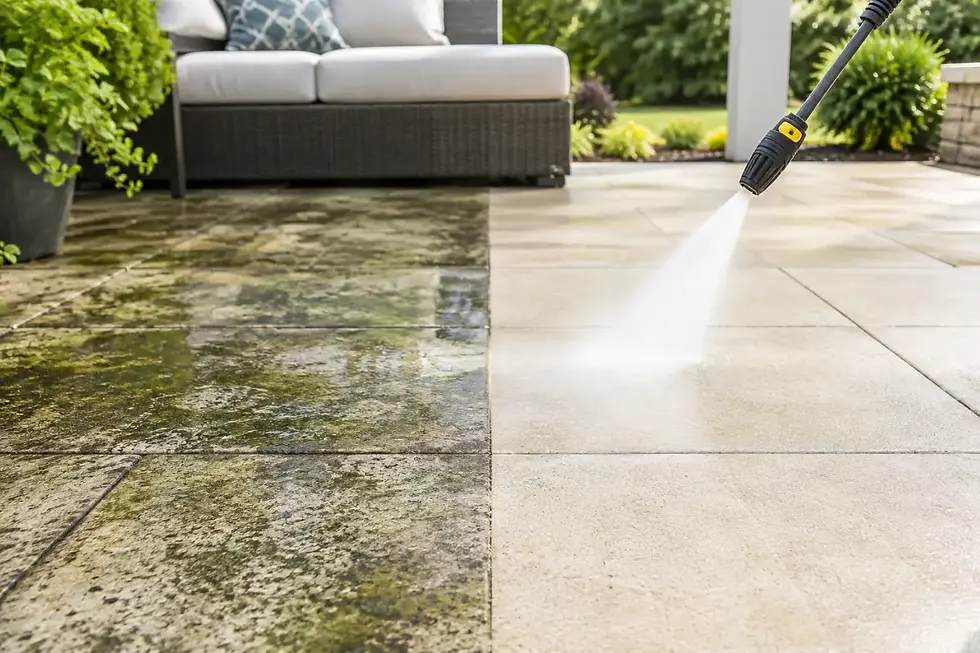
Concrete sidewalks, dumpster pads, entry aprons, drive lanes, loading zones, and parking decks usually respond well to pressure washing when the surface is structurally sound. These areas often need more than a rinse. They may require degreasing, hot water treatment, or surface cleaning equipment that delivers even results instead of leaving visible striping.
Building exteriors are more nuanced. Stucco, painted surfaces, vinyl siding, EIFS, and some masonry finishes often call for soft washing rather than aggressive high pressure. The goal is to remove algae, mildew, and grime without etching the surface or forcing water where it should not go.
Other high-value targets include awnings, breezeways, pool decks, common area walls, retaining walls, fences, patios, and storefront entry zones. Even trash enclosure areas and rear service corridors benefit from regular cleaning because they affect sanitation, odor, and overall appearance.
The key question is not simply what looks dirty. It is what is accumulating on the surface, how delicate the material is, and what cleaning approach removes contamination safely.
Pressure washing vs. soft washing
This is one of the most important distinctions in any commercial pressure washing guide. Pressure washing uses higher water pressure to break loose dirt and buildup from durable surfaces. Soft washing uses lower pressure along with the right cleaning solutions to treat organic growth and lift contamination from more sensitive materials.
If a contractor uses high pressure everywhere, the results can be costly. Mortar joints can be weakened. Paint can be stripped unevenly. Oxidized siding can be scarred. Wood can be furred. Water can be driven behind trim, signage, or siding. On the other hand, if every job is treated too lightly, oil stains, gum, and heavy buildup may remain.
Professional exterior cleaning is not about using the most pressure. It is about using the right amount, the right chemistry, and the right technique.
How often should a commercial property be washed?
The honest answer is that it depends on the property type, traffic volume, surrounding environment, and the standard you want to maintain. A medical office with a polished front entry may need more frequent attention than a low-traffic warehouse. A restaurant patio or dumpster area may need regular cleaning for sanitation reasons, while a suburban office building may focus on quarterly or seasonal appearance maintenance.
In the Carolinas, pollen season alone can make a property look neglected in a short window. Add humidity, tree cover, and summer storms, and mildew growth becomes more aggressive. Properties near busy roads also collect soot and grime faster than owners expect.
For many businesses, a recurring maintenance schedule makes more sense than waiting until buildup becomes obvious. Routine service is usually more efficient, easier on surfaces, and better for presentation than occasional heavy restoration cleaning.
What to expect from a professional service
A quality commercial cleaning service should start with evaluation, not assumptions. Different areas of the same property may need different treatment methods. Concrete at the front entry, painted trim near signage, and stucco sidewalls should not all be approached the same way.
A professional team should identify surface type, level of buildup, water access, drainage concerns, foot traffic patterns, and any areas that need special care. That includes landscaping, electrical fixtures, security cameras, outdoor furniture, and customer walkways.
Scheduling matters too. Many business owners prefer service during low-traffic hours to avoid disruption. Early morning, after-hours, or staggered scheduling can help maintain operations while still improving the exterior. For busy property managers and business owners, convenience is not a bonus. It is part of the value.
The best providers also think beyond the wash itself. They look at consistency, runoff control, finish quality, and how the property presents when the work is complete. Premium results come from attention to detail, not just equipment size.
Common mistakes to avoid
The biggest mistake is assuming all stains will come out completely. Some marks are surface-level contamination, while others are permanent discoloration, rust transfer, oxidation, or years-old oil penetration. A reputable contractor should be clear about likely improvement versus full removal.
Another common mistake is choosing based on the lowest price alone. Commercial pressure washing can look simple from a distance, but poor technique creates expensive problems. Uneven cleaning lines, damaged surfaces, dead landscaping, chemical overspray, and water intrusion can quickly erase any short-term savings.
It is also a mistake to wait too long between cleanings. Heavy buildup takes more labor to remove and often leaves the surface looking older than it should. Consistent maintenance usually produces a better-looking property with less aggressive treatment.
Choosing the right provider
If you are hiring for a commercial property, look for professionalism as much as technical capability. The provider should understand commercial surfaces, not just residential driveways. They should be able to explain when pressure washing is appropriate, when soft washing is better, and what results are realistic for your property.
Clear communication matters. You should know what areas are included, whether detergents or specialty treatments are needed, how access will be handled, and whether your business operations will be affected. If the company cannot explain its process clearly, that is usually a sign the execution may be inconsistent too.
For upscale properties and customer-facing businesses, presentation matters as well. A polished, reliable service partner reflects well on the property owner or manager. That is one reason many clients prefer a premium provider that treats exterior cleaning as part of asset care rather than just a quick spray-and-go job.
A smarter way to think about ROI
Commercial pressure washing is often framed as a cosmetic expense. In reality, it supports brand perception, upkeep, and risk reduction all at once. Customers notice clean entries and bright walkways. Tenants notice whether common areas feel maintained. Employees notice whether the property feels cared for.
There is also a practical maintenance benefit. Removing algae, mildew, grime, and corrosive residue can help surfaces age better. That does not mean washing replaces repairs or restoration, but it can absolutely support them. Clean surfaces are easier to inspect, easier to maintain, and easier to present at a higher standard.
For premium-minded businesses, appearance is part of operations. A clean building exterior tells people you pay attention. That message carries weight before a single conversation happens.
Commercial pressure washing guide for long-term upkeep
The best results come from treating pressure washing as part of a broader maintenance plan, not a once-a-year reaction to visible dirt. Start with the highest-visibility areas - entries, sidewalks, storefronts, and customer-facing concrete. Then consider the zones that affect safety and sanitation, such as rear access points, trash areas, and service corridors.
Document what gets dirty fastest. Notice where sprinklers hit the building, where shade keeps surfaces damp, and where traffic leaves the most buildup. Over time, that pattern makes scheduling easier and spending more efficient.
If your goal is a consistently polished commercial exterior, precision matters. The right method, the right timing, and the right service standard will always outperform a rushed cleanup. When a property looks professionally maintained from the curb, people assume the business behind it operates the same way.


Comments