

Pressure Washing vs Soft Washing Explained
- Chris Walker
- Jun 8
- 5 min read

A driveway stained with red clay and tire marks does not need the same treatment as a roof streaked with algae. That is where the pressure washing vs soft washing decision matters. Choosing the wrong method can leave behind uneven results, shorten the life of exterior surfaces, or create damage that costs far more than the cleaning itself.
For homeowners who care about curb appeal and long-term maintenance, this is less about picking the stronger option and more about using the right one. Professional exterior cleaning is not simply about force. It is about matching water pressure, cleaning agents, surface type, and contamination level with precision.
Pressure Washing vs Soft Washing: What Is the Difference?
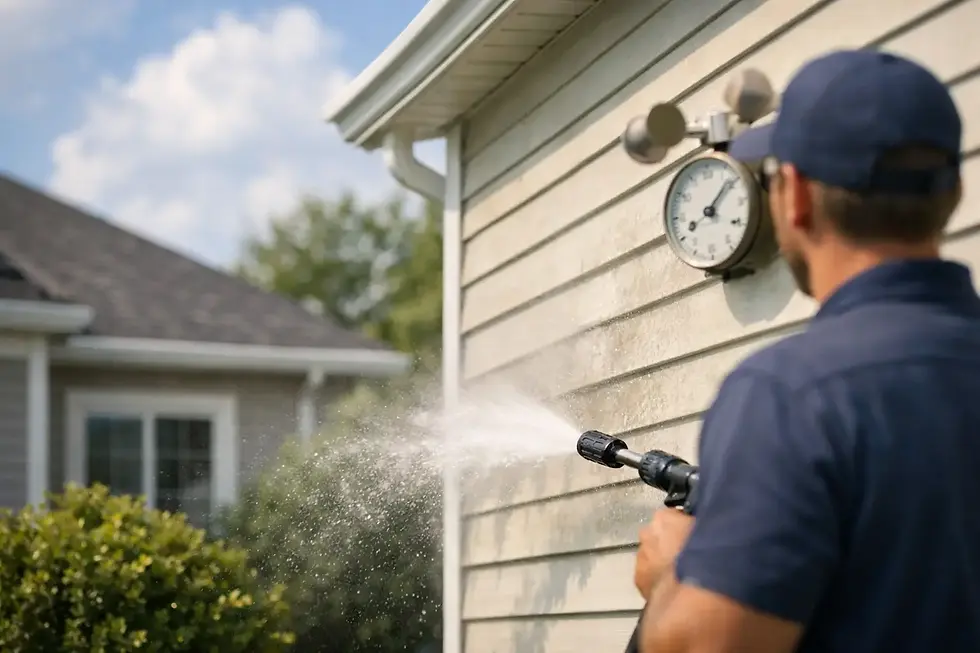
Pressure washing relies on high-pressure water to remove dirt, grime, mud, surface stains, and buildup from hard, durable materials. It is highly effective on concrete, stone, some pavers, and certain commercial surfaces where embedded debris needs mechanical force to break free.
Soft washing uses significantly lower pressure combined with specialized cleaning solutions to treat organic growth, mildew, algae, mold, and bacteria. Instead of blasting contamination off a surface, soft washing breaks it down at the source and rinses it away more gently.
That distinction matters. Pressure washing is primarily about force. Soft washing is primarily about chemistry, dwell time, and controlled rinsing. Both are professional cleaning methods, but they are built for different jobs.
When Pressure Washing Makes Sense
On the right surface, pressure washing delivers a dramatic improvement quickly. It is especially useful where grime, sand, mud, oxidation, or surface staining has settled into dense materials that can handle a more aggressive approach.
Driveways and sidewalks are common examples. Concrete can collect oil residue, dirt, pollen, tire marks, and organic staining over time. Patios, retaining walls, pool decks, and some commercial walkways also tend to benefit from pressure washing when the substrate is structurally sound.
The key phrase is structurally sound. Older concrete, cracked mortar, loose joint sand, or damaged pavers may not tolerate the same level of pressure as newer, well-maintained surfaces. A professional should adjust the equipment and technique instead of treating every hardscape the same way.
Pressure washing can also be the better choice when the goal is restoring the clean appearance of heavily used outdoor areas. If a driveway in Charlotte or Fort Mill sees constant vehicle traffic, muddy shoes, and seasonal pollen, a professional pressure wash can dramatically lift that buildup and sharpen the overall look of the property.
When Soft Washing Is the Better Option
Soft washing is the safer and more effective choice for more delicate exterior materials. That includes roofs, painted siding, stucco, vinyl, older wood surfaces, screened enclosures, and many exterior trim areas.
This method is especially valuable when organic growth is the real problem. Black roof streaks, green discoloration on siding, mildew around gutters, and algae on shaded exterior walls are not just sitting on the surface. They are living contaminants. High pressure may remove part of the visible staining, but it often does not fully address the root cause.
Soft washing treats those contaminants more completely. The cleaning solution does the heavy lifting, while the low-pressure rinse protects the surface. That usually means a cleaner finish and a longer-lasting result.
For premium homes, painted finishes, and exterior materials that contribute to property value, this matters. A surface can look clean for a week after being hit with too much pressure, then show lines, wear, or recurring stains shortly after. Soft washing is often the more meticulous approach because it prioritizes surface preservation as much as appearance.
Why Higher Pressure Is Not Always Better
One of the most common misconceptions in exterior cleaning is that more pressure means better results. In reality, too much pressure can etch concrete, scar wood, force water behind siding, strip paint, damage mortar joints, and loosen roofing materials.
That is why professional equipment alone is not enough. Technique matters. So does restraint.
A premium service approach starts with identifying the material, understanding the source of the staining, and selecting the least aggressive method that will still produce a high-level result. In many cases, that means soft washing first, pressure washing only where the surface genuinely requires it, or using a combination of both across different parts of the property.
Pressure Washing vs Soft Washing for Common Surfaces
Roofs
Roofs should generally be soft washed, not pressure washed. Asphalt shingles in particular can be damaged by excessive water pressure, and blasting away staining can shorten the life of the roof. Soft washing is designed to remove algae and dark streaking without the unnecessary risk.
House Siding
Vinyl, painted wood, and stucco are usually better suited to soft washing. While some siding can tolerate moderate pressure under skilled handling, soft washing is typically the safer option for a more even and surface-conscious clean.
Driveways and Sidewalks
Concrete and similar hard surfaces are strong candidates for pressure washing. These areas usually need enough force to lift embedded dirt and restore a brighter, cleaner finish. Oil and rust staining may require additional treatment, but pressure washing is often the foundation of the process.
Decks and Fences
This depends on the material and condition. Composite decking may require a controlled, lower-pressure cleaning approach. Wood decks and fences can be damaged easily if the pressure is too high, so professionals often use a softer wash method or very carefully reduced pressure.
Patios and Pavers
Many patios and paver surfaces respond well to pressure washing, but the cleaning has to be calibrated. Loose sand between joints, weathered sealants, or aging materials can change the equation. A careful assessment prevents accidental damage.
Which Method Lasts Longer?
If the staining is caused by dirt, soil, or surface debris, pressure washing can produce a very strong result. But if the issue is algae, mold, mildew, or bacteria, soft washing often lasts longer because it treats the contamination instead of only removing the visible layer.
That is one of the biggest practical differences in the pressure washing vs soft washing conversation. One method may make a surface look cleaner immediately, while the other may keep it cleaner longer. The right choice depends on what is actually on the surface.
For homeowners who want fewer repeat cleanings and better long-term maintenance, that distinction is worth paying attention to.
Cost, Value, and the Real Trade-Off
Some property owners compare these methods as if one is the premium option and the other is the budget option. That is not really how it works. The better question is whether the cleaning method protects the surface while delivering the result you want.
If a lower-priced service uses high pressure where a soft wash should have been used, the short-term savings can disappear quickly. Repainting damaged trim, replacing lifted shingles, or fixing water intrusion is far more expensive than choosing the correct method from the start.
Real value comes from accurate surface assessment, proper equipment, professional-grade solutions, and meticulous workmanship. That is especially true for higher-end homes, commercial storefronts, and properties where presentation matters.
How to Know What Your Property Needs
The safest answer is not to guess based on what looks dirty from the street. Two surfaces can appear similar and require completely different treatment.
A green-stained north-facing wall likely needs soft washing. A heavily soiled driveway likely needs pressure washing. A patio surrounded by landscaping may benefit from a mixed approach. The right recommendation comes from evaluating the surface material, age, condition, and type of buildup.
That is where a professional mobile service adds real convenience. Instead of hauling equipment, testing methods yourself, or risking damage with rental machinery, you get a tailored cleaning plan delivered directly to your home or business. For busy property owners, that combination of convenience and elite-level care is often the difference between a quick cleanup and a properly maintained exterior.
If you are looking at stained concrete, dark roof streaks, or siding that has lost its clean finish, the goal should not be to choose the strongest method. It should be to choose the method that restores the surface safely, protects the investment, and leaves the property looking like it is cared for on purpose.


Comments